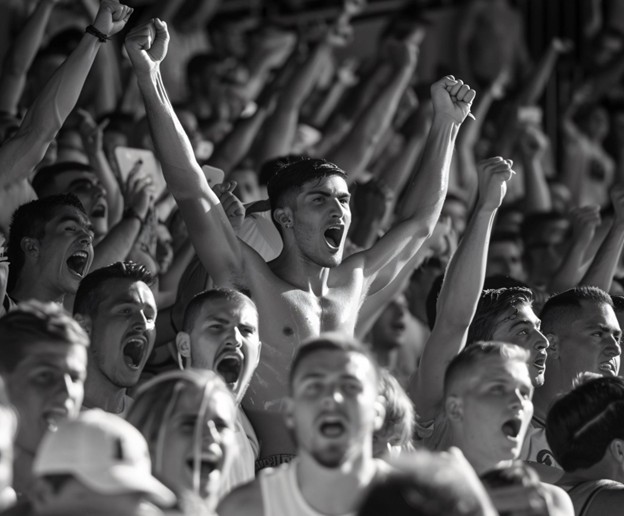
Crowd support has long been part of the athletic experience, and Kevin Morgan of Pittsford, NY points to the measurable impact that cheering spectators can have on performance during competition.
While physical preparation and strategy often take center stage, the psychological environment surrounding an athlete can influence outcomes in subtle but powerful ways. The presence of an engaged crowd introduces an external source of energy that can affect motivation, focus, and even physical output.
From packed stadiums to roadside supporters during endurance races, the effect of cheering fans extends beyond the atmosphere; it can shape how athletes perform under pressure.
The Psychology Behind Crowd Influence
Athletes do not compete in isolation. The sounds, reactions, and energy of a crowd create a dynamic environment that interacts with an athlete’s mental state.
Cheering can trigger several psychological responses, including:
- Increased adrenaline levels during key moments
- Heightened focus and alertness
- A stronger sense of purpose or urgency
- Reduced perception of fatigue
These responses are part of a broader concept often referred to as social facilitation, where the presence of others enhances performance on well-practiced tasks.
This mental boost can provide an extra edge for athletes who are already physically prepared.
Motivation During Critical Moments
One of the most noticeable effects of crowd support occurs during high-pressure situations. Whether it is the final stretch of a race or a decisive play in a game, external encouragement can push athletes to perform beyond their perceived limits.
In these moments, cheering can help:
- Reinforce determination when fatigue sets in
- Help athletes maintain pace or intensity
- Provide a psychological lift during difficult phases
- Strengthen commitment to finishing strong
This boost is not just emotional; it often translates into measurable performance improvements.
Athletes frequently report that hearing the crowd intensify during key moments helps them stay engaged and focused.
Endurance Sports and the Role of Spectators
The impact of cheering fans is especially evident in endurance sports, where mental resilience plays a critical role over long distances.
During marathons, triathlons, or cycling events:
- Spectators along the course break up mental monotony
- Encouragement provides distraction from physical discomfort
- Familiar voices or general crowd noise can improve mood
- Athletes feel supported even when competing individually
Unlike team sports, endurance athletes spend much of their time competing alone. The presence of spectators helps counteract that isolation, creating moments of connection that can sustain motivation.
Even brief interactions with the crowd can make a meaningful difference over the course of a long race.
Home Advantage and Familiar Environments
Crowd support is closely tied to the concept of home advantage. Competing in a familiar environment, surrounded by supportive fans, often leads to improved performance.
This advantage may stem from:
- Increased confidence in a supportive setting
- Reduced stress compared to unfamiliar venues
- Stronger emotional connection to the event
- Positive reinforcement from known supporters
Athletes competing at home often benefit from a combination of psychological comfort and external motivation.
While not every competition takes place on familiar ground, the influence of a supportive crowd can still create similar effects.
The Balance Between Pressure and Support
While crowd energy can be motivating, it can also introduce pressure. Expectations from fans, especially in high-stakes environments, may affect performance in different ways.
For some athletes, this pressure can:
- Increase stress or anxiety
- Disrupt focus if not managed effectively
- Create fear of underperforming
However, experienced athletes often learn to channel this pressure into motivation. Instead of becoming overwhelmed, they use the energy of the crowd as fuel for performance.
The ability to interpret crowd noise as encouragement rather than expectation is a skill developed over time.
Training the Mind to Respond to Crowd Energy
Mental preparation plays a key role in how athletes respond to external stimuli. Just as physical skills are trained, psychological responses can be developed and refined.
Athletes may use techniques such as:
- Visualization of competition environments
- Practicing under simulated crowd conditions
- Developing routines to maintain focus
- Learning to control breathing and emotional responses
These strategies help athletes remain composed while still benefiting from the motivational aspects of crowd support.
By preparing for these conditions, athletes can make better use of the energy around them.
When the Crowd Is Absent
The importance of crowd energy became especially clear during events held without spectators. Many athletes reported noticeable differences in motivation and atmosphere when competing in empty venues.
Without crowd support:
- The environment may feel less intense
- Motivation must come entirely from within
- External cues that signal progress or urgency are reduced
- The emotional experience of competition changes
These observations highlight how significant the presence of fans can be in shaping performance.
Even highly disciplined athletes can sense the difference when they remove that external energy.
A Subtle but Powerful Advantage
Crowd support may not appear on a stat sheet, but its influence on performance is difficult to ignore. The combination of psychological stimulation, emotional engagement, and environmental energy creates conditions that can elevate athletic output.
While training, strategy, and preparation remain the foundation of success, the role of spectators adds another dimension to competition.
Athletes who learn to harness this energy can turn it into a meaningful advantage, especially during moments that demand resilience and determination.
The Energy That Moves Performance Forward
Cheering fans bring more than noise to a competition; they bring momentum. Their presence can influence how athletes feel, think, and perform in real time.
As sports continue to evolve, the relationship between athletes and spectators remains a constant. The shared energy between the two creates an environment where performance is not only measured in physical terms but also shaped by connection, emotion, and collective experience.
In that space, even a few seconds of encouragement can make a lasting difference.
