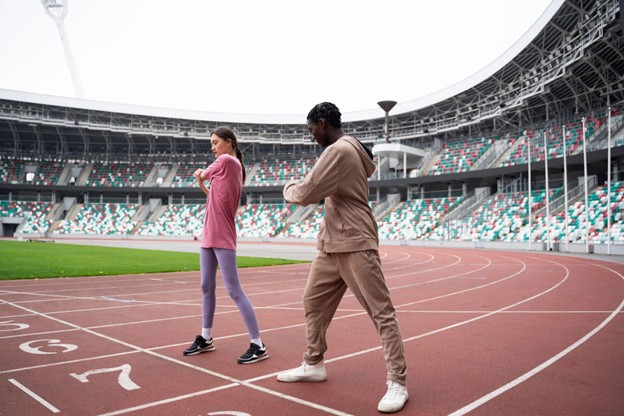
Anyone who has ever stood on a start line understands the difference between silence and noise, and for endurance athletes like Kevin Morgan of Pittsford NY, the presence of a crowd is more than background atmosphere; it can measurably influence performance. A quiet training run feels internal, while a race lined with spectators carries a different kind of energy.
Sports psychology and physiology research supports what many athletes describe as ‘adrenaline’ or ‘race-day buzz’. Spectators can influence pacing, hormone levels, perception of effort, and even pain tolerance. In competitive environments, this tangible effect can make the difference between maintaining pace and fading late.
The Psychology of Social Facilitation
One of the most studied concepts in performance psychology is social facilitation, the tendency for people to perform better on well-learned tasks when others are watching.
In racing, this matters.
When athletes train alone, motivation must be self-generated. During a race, however, the presence of cheering spectators creates a psychological stimulus. The brain interprets observation as important. Importance increases focus.
Research shows that when individuals feel observed:
- Reaction times often improve
- Effort output increases
- Task engagement deepens
- Competitive drive intensifies
For experienced athletes performing highly practiced movements like distance running, this heightened arousal can enhance performance.
The Adrenaline Response
Crowds trigger a mild stress response. But not all stress is negative.
When runners hear cheering, see movement, and sense collective attention, the body responds with increased adrenaline. This hormone:
- Elevates heart rate
- Boosts blood flow to muscles
- Sharpens awareness
- Temporarily reduces fatigue signals.
In moderation, this surge can improve early-race pacing and responsiveness. The key is control. Too much adrenaline can lead to starting too fast. But managed properly, it sharpens performance.
Perception of Effort Changes in Public
One of the most fascinating aspects of crowd energy is how it affects perceived exertion.
Athletes don’t just slow down because their muscles fail; they slow down because their brains interpret effort as unsustainable.
Crowds alter that interpretation.
When spectators cheer:
- Attention shifts outward instead of inward
- Focus moves away from discomfort.
- Pain signals feel less dominant.
- Effort feels more purposeful.
Psychologists call this ‘attentional distraction.’ By pulling focus toward external stimuli, the brain temporarily reduces awareness of fatigue.
That’s why many runners report feeling a ‘second wind’ when entering crowded sections of a course.
The Pacing Effect
Crowds don’t just provide emotional boosts; they can subtly influence pacing decisions.
When runners pass large spectator groups:
- Stride frequency often increases
- Posture improves
- Facial expressions shift
- Speed naturally rises
This phenomenon sometimes happens unconsciously. Athletes respond to energy by increasing visible effort.
Interestingly, studies have shown that runners often post their fastest splits in high-spectator areas, such as near finish lines or iconic course landmarks.
However, experienced competitors learn to harness this effect strategically rather than impulsively.
Collective Emotion Is Contagious
Humans are wired for emotional synchronization. When a crowd is enthusiastic, that emotion spreads.
Neuroscience research suggests that mirror neurons, brain cells that activate when observing others, may play a role in this. Seeing excitement can generate internal excitement.
In endurance racing, such behavior matters during critical moments:
- Late-race fatigue
- Hills or course obstacles
- Final sprint segments
A cheering crowd creates a shared emotional experience. The athlete is no longer running alone; they are participating in something collective.
That shift in mindset can elevate resilience.
The Home Course Advantage
There is also a localized element to crowd influence.
Athletes competing in familiar communities often experience:
- Stronger emotional investment
- Greater support recognition
- Heightened accountability
- Increased confidence
Hearing your name called out or spotting familiar faces can reinforce identity and commitment mid-race.
While physiological capacity ultimately determines performance ceilings, psychological reinforcement can push athletes closer to those ceilings.
When Crowd Energy Backfires
It’s worth noting that crowd influence isn’t universally positive.
Potential downsides include:
- Starting too aggressively
- Overextending early effort
- Elevated anxiety in inexperienced competitors
- Loss of internal pacing awareness
Elite athletes often train specifically to manage adrenaline and maintain discipline amid high-energy environments.
The most effective competitors don’t resist crowd energy; they regulate it.
Training for the Noise
Because race-day environments differ from training conditions, some athletes simulate competitive intensity by:
- Running segments at race pace in group settings
- Training on populated routes
- Practicing controlled starts
- Visualizing high-energy environments
Mental rehearsal helps reduce emotional spikes when real crowds appear.
The goal is balance: harness the lift without losing strategy.
The Science Behind the Surge
Ultimately, spectator influence operates at the intersection of psychology and physiology.
Crowds affect:
- Hormonal output
- Neural focus
- Emotional intensity
- Perceived effort thresholds
- Decision-making under fatigue
Endurance racing is as much mental as physical. When fatigue rises, the brain acts as a governor. External stimuli like cheering spectators temporarily nudge that governor higher.
That doesn’t replace training. It amplifies it.
Performance Is Never Entirely Solo
Even in individual sports, performance unfolds in a social environment. Races are shared experiences. Spectators become part of the performance ecosystem.
The next time a runner surges through a cheering section, it isn’t just emotion. It’s biology, psychology, and collective energy interacting in real time.
Crowd energy doesn’t run the miles for you, but it can help you access strength you didn’t realize was still available.
